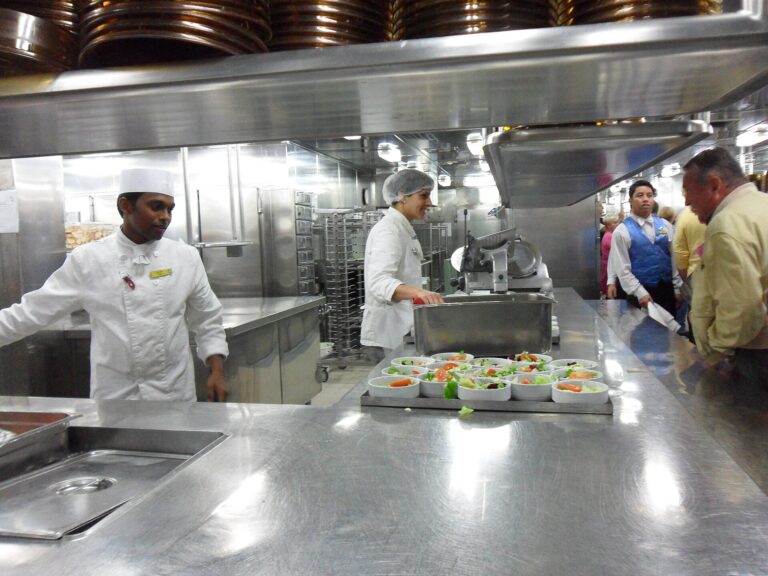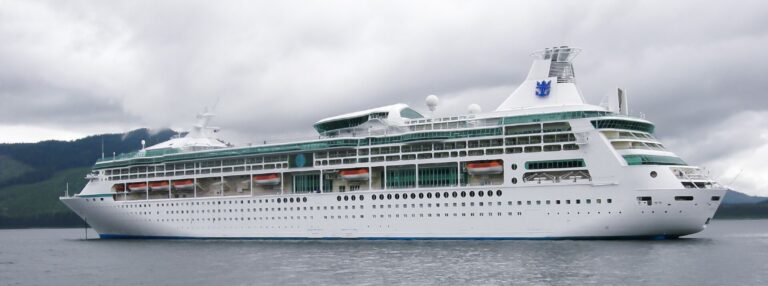
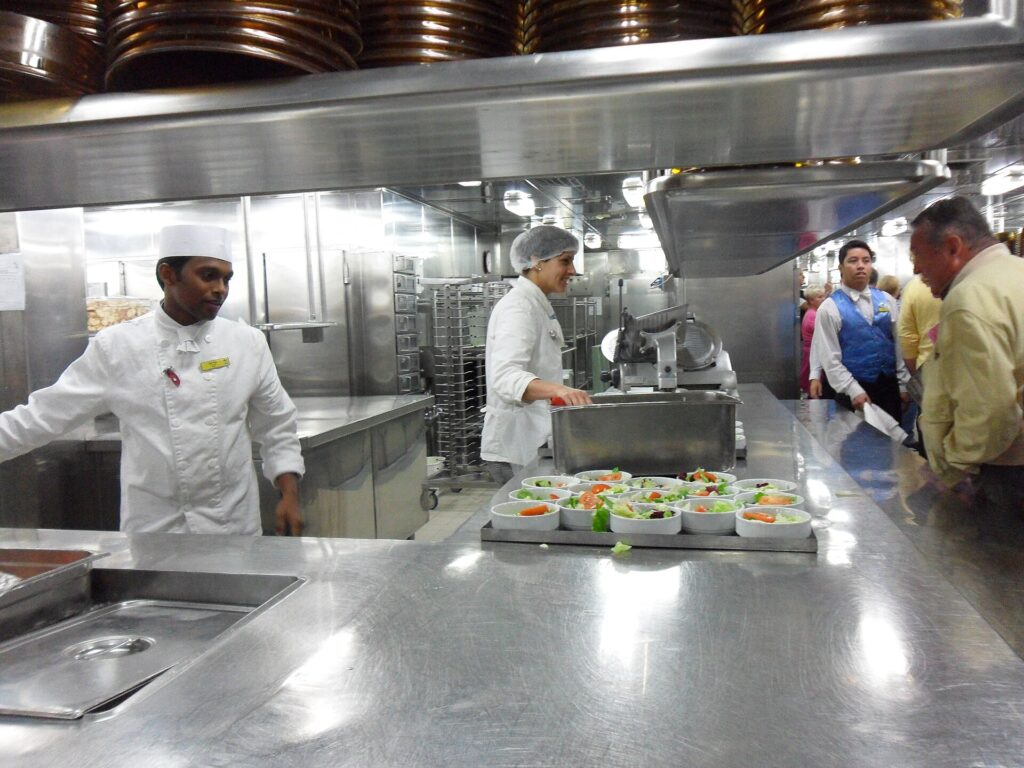
A cruise ship galley serves thousands of meals a day – main dining rooms, buffets, specialty restaurants, room service and the crew mess. It is one of the largest teams on board and a great place for trained cooks from Morocco and North Africa, where culinary schools and hotel kitchens produce strong profiles.
How the galley brigade is organised
Most cruise galleys follow the classic kitchen hierarchy:
- Galley utility / galley steward – cleaning, dishwashing, moving supplies. An entry-level job that does not need culinary training.
- Commis (cook) – prepares ingredients and cooks under supervision. The first rank for trained cooks.
- Demi chef de partie – runs part of a station and supervises commis.
- Chef de partie – responsible for a station such as hot kitchen, cold kitchen, pastry, bakery or butchery.
- Sous chef and junior sous chef – lead a section or a restaurant galley and manage teams.
- Executive sous chef and executive chef – plan menus, control costs and manage the whole culinary operation.
There are also specialist roles: pastry and bakery teams, butchers, pizza chefs and crew cooks who prepare food for the crew mess.
Hygiene is everything
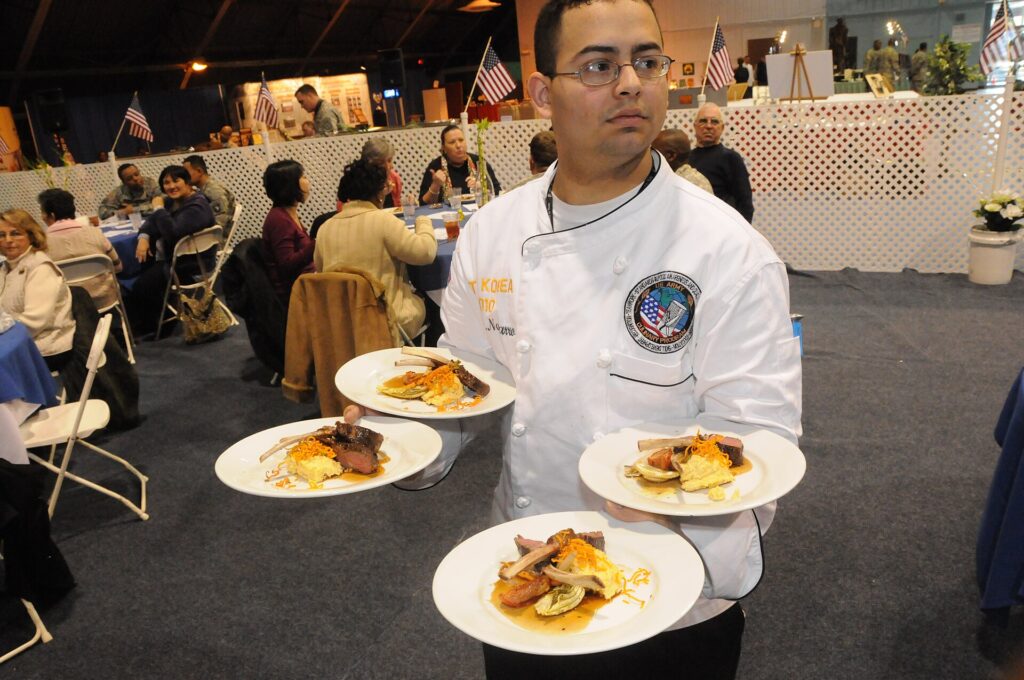
Cruise galleys work to strict food safety systems. HACCP principles apply, and ships that call at US ports are inspected under the US Public Health (USPH) Vessel Sanitation Program. Expect temperature logs, colour-coded equipment, constant cleaning and surprise inspections. Showing that you already know HACCP is a real advantage in interviews.
What employers ask for
- A culinary diploma or certificate (for commis and above).
- Experience in a busy hotel, resort or high-volume restaurant – often one to two years for commis, more for chef de partie.
- Knowledge of international cuisine, plus your own specialities.
- Basic kitchen English: ingredients, equipment, safety words and orders.
- STCW basic training and a seafarer’s medical certificate.
How fast can you move up?
Promotion depends on performance and on positions becoming available. Good cooks who return for several contracts often move up one rank every one or two contracts. Ask for training on different stations, learn the recipe and costing systems, and keep good appraisals – they follow you from ship to ship.
For pay, read our guide to cruise ship salaries, and see entry-level jobs if you are starting out. When you are ready, create your free profile.